Advertiser Disclosure
This is an independent, advertising-supported comparison website. We may receive compensation from our partners when you click links on our site and take certain actions on their websites. This compensation helps keep this site free to use.
Compensation is one of several factors that may affect which products we feature, how prominently we feature them, and where they appear on our site, including, for example, their order on the page. Other factors may include our ratings and analysis, product availability, product features, and relevance to the page. We don't cover every credit card or offer available in the market. The order or prominence of products on our site does not necessarily reflect the rating we assign to a product or our assessment of its overall quality.
Compensation never affects our product ratings, analysis, or opinions, and our partners cannot pay us for a higher rating or a more favorable review.
Best Credit Cards of October 2026
 By CardAnalyst EditorsFact checkedUpdated October 8, 2026
The best credit cards can deliver hundreds of dollars in value per year, and for some people much more. The real question is finding the one that’s best for you.
We get it: most people don’t want to sift through the fine print on hundreds of credit cards. Call us strange, but that’s exactly the kind of thing we like doing.
We’ve evaluated 261 cards, dug into 31 data points for each one, and used our proprietary ratings model to narrow the field to the 11 credit cards below.
These are the cards we’d recommend first to our own friends and family.
Here are the best credit cards of October 2026:
Best Overall Credit Card
Chase Freedom Unlimited®
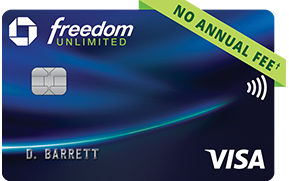
Pick this card if: You want one card that does nearly everything well, with strong rewards, a valuable welcome bonus, and a useful 0% intro APR period.
- Welcome Bonus
- $200
- Rewards Rate
- 1.5%-5% cash back
- Annual Fee
- $0
- Balance Transfer Intro APR
- 0% intro APR on balance transfers for 15 months
- Purchases Intro APR
- 0% intro APR on purchases for 15 months
- Regular APR
- 18.24%-27.74% Variable APR
- Recommended Credit Score
- 670-850 (Good to Excellent)
Card Details
- Earn a $200 Bonus after you spend $500 on purchases in your first 3 months from account opening
- Enjoy 5% cash back on travel purchased through Chase Travel℠, our premier rewards program that lets you redeem rewards for cash back, travel, gift cards and more; 3% cash back on drugstore purchases and dining at restaurants, including takeout and eligible delivery service, and 1.5% on all other purchases.
- No minimum to redeem for cash back. You can use points to redeem for cash through an account statement credit or an electronic deposit into an eligible Chase account located in the United States!
- Enjoy 0% Intro APR for 15 months from account opening on purchases and balance transfers, then a variable APR of 18.24% - 27.74%.
- No annual fee – You won't have to pay an annual fee for all the great features that come with your Freedom Unlimited® card
- Keep tabs on your credit health, Chase Credit Journey helps you monitor your credit with free access to your latest score, alerts, and more.
- Member FDIC
Pros & Cons
Pros
- Lucrative, easy-to-earn welcome bonus
- Above-average 0% intro APR period
- Solid unlimited cash back rate
Cons
- Other cards can earn more (but are often more complicated)
- Foreign transaction fee
Why we like it
There just aren’t many credit cards that are this good at this many things. You get strong rewards, a valuable welcome bonus, and a solid 0% intro APR period, all with no annual fee. It may not lead every individual category, but it's very good at pretty much everything. That’s why it’s our Best Overall Credit Card for 2026 and one of the most popular credit cards in America.
Opens in a new tab: Apply now for the Chase Freedom Unlimited® →Best Balance Transfer Card
Citi® Diamond Preferred® Card

Pick this card if: You want serious breathing room to pay down debt. We haven’t come across a longer 0% intro APR period for balance transfers than this.
- Balance Transfer Intro APR
- 0% intro APR on balance transfers for 21 months
- Purchases Intro APR
- 0% intro APR on purchases for 12 months
- Regular APR
- 16.49%-27.24% Variable APR
- Recommended Credit Score
- 670-850 (Good to Excellent)
- Annual Fee
- $0
Card Details
- 0% Intro APR on balance transfers for 21 months and on purchases for 12 months from date of account opening. After that the variable APR will be 16.49% - 27.24%, based on your creditworthiness. Balance transfers must be completed within 4 months of account opening.
- There is an intro balance transfer fee of 3% of each transfer (minimum $5) completed within the first 4 months of account opening. After that, your fee will be 5% of each transfer (minimum $5).
- No Annual Fee - our low intro rates and all the benefits don't come with a yearly charge.
- Buy now and pay later. Split your payment for eligible purchases of $75 or more into a fixed payment with Citi® Flex Pay.
- Get free access to your FICO® Score online.
Pros & Cons
Pros
- Extremely long intro balance transfer period
- Low intro balance transfer fee
- No annual fee
Cons
- Does not offer rewards
- Relatively short intro purchases period
Why we like it
This is a fantastic choice if your priority is paying down debt with an ultra-long balance transfer intro APR period and low fees. It won’t earn you rewards, but for most people looking for a balance transfer card, that’s not the point. This card is hard to beat if your main goal is getting debt under control while limiting costly interest charges.
Opens in a new tab: Apply now for the Citi® Diamond Preferred® Card →Best 0% Intro APR Card
Wells Fargo Reflect® Card
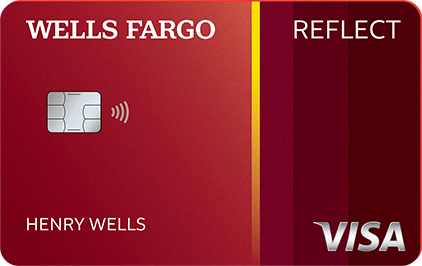
Pick this card if: You want an exceptionally long 0% intro APR period, whether you’re paying down existing debt, avoiding interest on new purchases, or both.
- Balance Transfer Intro APR
- 0% intro APR for 21 months from account opening on qualifying balance transfers
- Purchases Intro APR
- 0% intro APR for 21 months from account opening on purchases
- Regular APR
- 17.49%, 23.99%, or 28.24% Variable APR
- Recommended Credit Score
- 670-850 (Good to Excellent)
- Annual Fee
- $0
Card Details
- Apply Now to take advantage of this offer and learn more about product features, terms and conditions.
- 0% intro APR for 21 months from account opening on purchases and qualifying balance transfers. 17.49%, 23.99%, or 28.24% variable APR thereafter; balance transfers made within 120 days qualify for the intro rate, BT fee of 5%, min: $5.
- $0 annual fee.
- Up to $600 of cell phone protection against damage or theft. Subject to a $25 deductible.
- Through My Wells Fargo Deals, you can get access to personalized deals from a variety of merchants. It's an easy way to earn cash back as an account credit when you shop, dine, or enjoy an experience simply by using an eligible Wells Fargo credit card.
Pros & Cons
Pros
- Excellent 0% intro APR offer for balance transfers
- Excellent 0% intro APR offer for purchases
- No annual fee
Cons
- No rewards
- Balance transfer fee is higher than some competitor cards
Why we like it
It’s rare to find a card this strong for balance transfers and purchases -- this is one of the longest 0% intro APR periods available for both. It doesn't offer rewards, but if your priority is getting the longest 0% period you can, that doesn't matter much. This is an excellent pick whether your goal is paying down existing debt, avoiding interest on new spend, or both.
Opens in a new tab: Apply now for the Wells Fargo Reflect® Card →Best for huge cash back potential
Discover it® Cash Back

Pick this card if: You want a high-upside card with big welcome bonus and rewards potential, plus a strong 0% intro APR offer.
- Welcome Bonus
- Discover will match all the cash back you’ve earned at the end of your first year.
- Rewards Rate
- 1%-5% Cash Back
- Annual Fee
- $0
- Balance Transfer Intro APR
- 0% intro APR on balance transfers for 15 months
- Purchases Intro APR
- 0% intro APR on purchases for 15 months
- Regular APR
- 17.49%-26.49% Variable APR
- Recommended Credit Score
- 670-850 (Good to Excellent)
Card Details
- INTRO OFFER: Unlimited Cashback Match for all new cardmembers. Discover will automatically match all the cash back you’ve earned at the end of your first year! There’s no minimum spending or maximum rewards. You could turn $150 cash back into $300.
- Earn 5% cash back on everyday purchases at different places you shop each quarter like grocery stores, restaurants, gas stations, and more, up to the quarterly maximum when you activate. Plus, earn unlimited 1% cash back on all other purchases.
- Redeem cash back for any amount. No annual fee.
- 0% intro APR on purchases and balance transfers for 15 months; 17.49% - 26.49% variable APR after that; balance transfer fee applies.
- Terms and conditions apply.
Why we like it
This card offers the potential for high cash back returns, thanks to an innovative welcome bonus and rewards structure. Throw in a strong 0% intro APR offer and no annual fee, and it's easy to see why this is a popular pick for those looking to achieve serious cash back.
Opens in a new tab: Apply now for the Discover it® Cash Back →Best Travel Credit Card
Chase Sapphire Preferred® Card

Pick this card if: You want our top travel card with valuable rewards, a big welcome bonus, and useful perks without paying a big annual fee.
- Welcome Bonus
- 75,000 points (worth at least $750)
- Rewards Rate
- 5x on Chase Travel℠, 3x on dining, 2x on all other travel
- Annual Fee
- $95
- Regular APR
- 19.24%-27.49% Variable APR
- Recommended Credit Score
- 670-850 (Good to Excellent)
Card Details
- Earn 75,000 bonus points after you spend $5,000 on purchases in the first 3 months from account opening.
- Enjoy benefits such as 5x on travel purchased through Chase Travel℠, 3x on dining, 3x on vacation homes, 3x on gas & EV charging, 3x on top streaming services and online groceries (excluding Walmart, Target, and wholesale clubs), 2x on all other travel purchases, 1x on all other purchases
- Earn up to $100 in statement credits each account anniversary year for hotel stays through Chase Travel
- Count on Trip Cancellation/Interruption Insurance, Auto Rental Collision Damage Waiver, Emergency Evacuation and Transportation and more
- Get a year of complimentary Apple TV when activated by December 31, 2026 - a value of $156.
- Complimentary DashPass which unlocks $0 delivery fees & lower service fees for 12 months when you activate by 12/31/27. Plus, a $10 promo each month on non-restaurant orders.
- Receive one statement credit of up to $120 every four years as reimbursement for the application fee charged to your card for a Global Entry, TSA Precheck® or NEXUS application.
- Transfer points to leading airline and hotel loyalty programs
- Member FDIC
Pros & Cons
Pros
- Big welcome bonus
- Strong rewards on travel and dining
- Lots of ways to use rewards for travel
Cons
- No 0% intro APR offer
- Some other travel cards offer better rewards and perks (though also higher annual fees)
Why we like it
This is our favorite all-around travel card. It packs a lot of value into one card without making things overly complicated, and the annual fee is much less than premium travel cards. You earn strong rewards on the kinds of purchases travelers make regularly, get a big welcome bonus, and have plenty of good ways to use those rewards for travel.
Opens in a new tab: Apply now for the Chase Sapphire Preferred® Card →Best for flat rate cash back
Citi Double Cash® Card
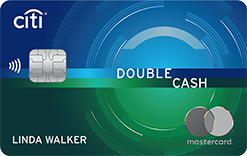
Pick this card if: You want one of the best flat cash back rates available, or an excellent balance transfer offer — or both.
- Welcome Bonus
- $200
- Rewards Rate
- Earn 2% cash back on every purchase
- Annual Fee
- $0
- Balance Transfer Intro APR
- 0% intro APR on balance transfers for 18 months
- Regular APR
- 18.24%-28.49% Variable APR
- Recommended Credit Score
- 670-850 (Good to Excellent)
Card Details
- Earn $200 cash back after you spend $1,500 on purchases in the first 6 months of account opening. This bonus offer will be fulfilled as 20,000 ThankYou® Points, which can be redeemed for $200 cash back.
- Earn 2% on every purchase with unlimited 1% cash back when you buy, plus an additional 1% as you pay for those purchases. To earn cash back, pay at least the minimum due on time. Plus, earn 5% total cash back on hotel, car rentals and attractions booked with Citi Travel.
- Balance Transfer Only Offer: 0% intro APR on Balance Transfers for 18 months. After that, the variable APR will be 18.24% - 28.49%, based on your creditworthiness.
- Balance Transfers do not earn cash back. Intro APR does not apply to purchases.
- If you transfer a balance, interest will be charged on your purchases unless you pay your entire balance (including balance transfers) by the due date each month.
- There is an intro balance transfer fee of 3% of each transfer (minimum $5) completed within the first 4 months of account opening. After that, your fee will be 5% of each transfer (minimum $5).
Pros & Cons
Pros
- Fantastic unlimited flat cash back rate
- Long 0% intro APR balance transfer offer
- No annual fee
Cons
- No 0% intro APR offer for purchases
- Higher spend required to trigger welcome bonus than some competing cards
Why we like it
The flat rate cash back is one of the best available today (Earn 2% cash back on every purchase). This card pairs that with a well above-average balance transfer offer and a solid welcome bonus. It's a great option for those who value simplicity and high flat cash back earnings you don't have to think about, or a strong balance transfer offer, or both.
Opens in a new tab: Apply now for the Citi Double Cash® Card →Best Premium Travel Card
Capital One Venture X Rewards Credit Card

Pick this card if: You're a regular traveler looking to rack up serious rewards, perks like lounge access, plus a strong welcome bonus and annual travel credits.
on Capital One's website
Rates & Fees for Capital One Venture X Rewards Credit Card (opens in a new tab)
- Welcome Bonus
- 75,000 miles (Worth $750 in travel)
- Rewards Rate
- 2x-10x Miles
- Annual Fee
- $395
- Regular APR
- 19.49%-28.49% Variable APR
- Recommended Credit Score
- 720-850 (Excellent)
Card Details
- Earn 75,000 bonus miles when you spend $4,000 on purchases in the first 3 months from account opening, equal to $750 in travel
- Receive a $300 annual credit for bookings through Capital One Travel, where you'll get Capital One's best prices on thousands of trip options
- Get 10,000 bonus miles (equal to $100 towards travel) every year, starting on your first anniversary
- Earn unlimited 10X miles on hotels and rental cars booked through Capital One Travel and 5X miles on flights and vacation rentals booked through Capital One Travel
- Earn unlimited 2X miles on all other purchases
- Enjoy access to 1,300+ lounges worldwide, including Capital One Lounge and Landing locations and participating Priority Pass™ lounges, after enrollment
- Use your Venture X miles to easily cover travel expenses, including flights, hotels, rental cars and more—you can even transfer your miles to your choice of 15+ travel loyalty programs
- Enjoy a $100 experience credit and other premium benefits with every hotel and vacation rental booked from the Premier Collection
- Receive up to a $120 credit for Global Entry or TSA PreCheck®
- Top rated mobile app
Why we like it
Our top pick for premium travel cards, this card is packed with value. It offers an impressive ongoing rewards structure and a strong welcome bonus, plus perks like lounge access. The annual fee might look large, but it's much smaller than some other premium travel cards and can be easily offset by regular travel purchases and the annual travel credit.
Opens in a new tab: Apply now for the Capital One Venture X Rewards Credit Card →Blue Cash Preferred® Card from American Express
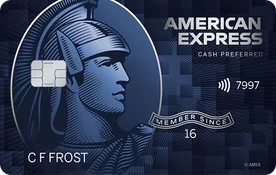
Pick this card if: You want a top rewards rate on things like groceries, streaming, and gas -- plus a potentially lucrative welcome bonus.
on American Express's website
Rates & Fees for Blue Cash Preferred® Card from American Express (opens in a new tab)
- Welcome Bonus
- As High as $300 cash back. Find Out Your Offer.
- Rewards Rate
- 1%-6% Cashback
- Annual Fee
- $0 intro annual fee for the first year, then $95
- Balance Transfer Intro APR
- 0% intro APR on balance transfers for 12 months from the date of account opening
- Purchases Intro APR
- 0% intro APR on purchases for 12 months from the date of account opening
- Regular APR
- 19.74%-28.74% Variable APR
- Recommended Credit Score
- 670-850 (Good to Excellent)
Card Details
- Apply and find out your welcome offer. As High As $300 cash back* after you spend $3,000 in purchases on your new Card within the first 6 months of Card Membership. Welcome offers vary and you may not be eligible for an offer. Apply, and if approved: 1. Find out your offer amount 2. Accept the Card with your offer 3. Spend $3,000 in 6 months 4. Receive the cash back. *Cash back is received in the form of Reward Dollars that can be redeemed for a statement credit or at Amazon.com checkout.
- $0 intro annual fee for the first year, then $95.
- Enjoy 0% intro APR on purchases and balance transfers for 12 months from the date of account opening. After that, your APR will be a variable APR of 19.74%-28.74%.
- Plan It®: Buy now, pay later with Plan It. Split purchases of $100 or more into equal monthly installments with a fixed fee so you don’t have the pressure of paying all at once. Simply select the purchase in your online account or the American Express® App to see your plan options. Plus, you’ll still earn rewards on purchases the way you usually do.
- Earn 6% cash back at U.S. supermarkets on up to $6,000 per year in eligible purchases (then 1%), 6% cash back on select U.S. streaming subscriptions, 3% cash back at eligible U.S. gas stations and on transit (including taxis/rideshare, parking, tolls, trains, buses and more) purchases and 1% cash back on other purchases. Cash Back is received in the form of Reward Dollars that can be redeemed as a statement credit and at Amazon.com checkout.
- Get up to a $10 monthly statement credit after using your enrolled Blue Cash Preferred® Card for a subscription purchase, including a bundle subscription purchase, at DisneyPlus.com, Hulu.com, or Stream.ESPN.com U.S. websites. Subject to auto-renewal.
- Terms Apply.
Best Business Credit Card
Ink Business Unlimited® Credit Card
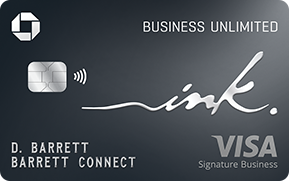
Pick this card if: You want our top all-around business card with a big welcome bonus, simple rewards on every purchase, and a useful 0% intro APR offer.
on Chase's website
Rates & Fees for Ink Business Unlimited® Credit Card (opens in a new tab)
- Welcome Bonus
- $750
- Rewards Rate
- 1.5%
- Annual Fee
- $0
- Purchases Intro APR
- 0% intro APR on purchases for 12 months
- Regular APR
- 16.74%-24.74% Variable APR
- Recommended Credit Score
- 670-850 (Good to Excellent)
Card Details
- Earn $750 bonus cash back after you spend $6,000 on purchases in the first 3 months from account opening
- Earn unlimited 1.5% cash back on every purchase made for your business
- No Annual Fee
- Redeem rewards for cash back, gift cards, travel and more through Chase Ultimate Rewards®.
- Earn rewards faster with employee cards at no additional cost. Set individual spending limits for greater control.
- Round-the-clock monitoring for unusual credit card purchases
- With Zero Liability you won't be held responsible for unauthorized charges made with your card or account information.
- 0% introductory APR for 12 months on purchases
- Earn 5% total cash back on Lyft rides through 9/30/27.
- Member FDIC
Pros & Cons
Pros
- Lucrative welcome bonus
- Solid unlimited rewards rate
- Long 0% intro APR period for purchases
Cons
- No bonus rewards categories
- Somewhat high spend hurdle to achieve the welcome bonus
Why we like it
This is our favorite business card to recommend because it combines lucrative cash back with a simple rewards setup that works for almost any business. You get a big welcome bonus, a solid rewards rate on every purchase, and a rare 0% intro APR period for purchases -- all with no annual fee.
Opens in a new tab: Apply now for the Ink Business Unlimited® Credit Card →How to choose the best credit card for you
Start with what you’re looking to get out of your credit card.
That one question eliminates a lot of bad choices. Credit card marketing is very good at making every perk sound valuable, but most of them won’t be equally valuable to you.
If you’re carrying credit card debt, we’d worry about getting rid of the interest before spending much time optimizing rewards. The money you can save on interest will likely dwarf what you’d earn in cash back or points.
If you pay your statement balance in full every month, rewards become much more important. Look at where your money actually goes. Groceries, restaurants, travel, or just general spending. You can build an elaborate multi-card setup if you enjoy that, or get a single strong card for a one-card wallet, or somewhere in-between. Our best rewards credit cards highlights our top picks.
In general, a good card you’ll use correctly is better than a theoretically perfect card you have to think about every time you reach for your wallet.
We think travel cards deserve a little more scrutiny. A long list of benefits can look impressive, but we care more about whether you’ll actually use them. A credit, lounge membership, or travel perk has very little value if it changes your behavior just so you can justify having the card.
The same goes for annual fees. We don’t think paying a fee is inherently bad. Paying a fee for benefits you wouldn’t otherwise use is.
So our basic rule is simple: figure out what you want the card to accomplish, then ignore the features that don’t help you accomplish it.
What makes a good credit card?
There isn’t one feature that makes a credit card good.
A great rewards card needs to earn well on the things you actually spend money on. A good travel card needs rewards and benefits you can realistically use. A card meant for paying down debt needs to make that job easier and less expensive.
That’s also why we don’t rate every credit card using the same rubric.
The feature that matters most in one category can be almost irrelevant in another. We’d rather judge a card on how well it does its job than reward it for having the longest list of benefits.
And sometimes simplicity is a feature. Plenty of people would be better off with one very good card they understand than four cards they’re constantly trying to optimize.
Why use a credit card?
Used well, credit cards offer some real advantages over paying with cash or a debit card.
The important part is used well. Racking up interest charges will often override even the best rewards setup.
You can earn meaningful rewards
If you’re already going to spend the money, getting something back is better than getting nothing.
That could mean cash back on normal household spending or travel rewards you eventually use toward a trip. Over a year, the difference can be meaningful. Over many years, even more so.
But the purchase should always come first and the reward second.
Spending extra money to earn more points isn’t a rewards strategy. It’s just spending extra money.
Credit cards can help you build credit
Responsible credit card use can help build a strong credit history over time.
Paying on time matters. So does keeping your borrowing under control and showing that you can use credit responsibly.
One myth worth killing: you do not need to carry a balance or pay interest to build credit.
There’s no credit-score bonus for sending interest payments to a bank.
We prefer credit cards to debit cards for many purchases
Fraud protection is a big reason.
Both credit and debit cards have protections against unauthorized transactions, but there’s a practical difference we care about. With a credit card, a fraudulent purchase generally hits the issuer’s credit line. With a debit card, the money can come directly out of your checking account.
We’d rather dispute a charge than try to get our own cash put back while an issue is being resolved.
That’s especially true for things like online purchases and travel, where your card information may pass through more systems.
They can make cash flow easier to manage
A credit card lets you make purchases throughout the month and pay for them later.
That doesn’t have to mean borrowing money long term. If you pay the statement balance in full, the card can simply function as a convenient payment method with some extra time between the purchase and when the cash leaves your account.
Useful flexibility.
What we don’t like is when that flexibility quietly turns into a balance that rolls over month after month.
How to use a credit card responsibly
Our default advice is pretty boring:
Pay the full statement balance every month if you can.
Boring is good here.
That habit lets you take advantage of rewards and other card benefits without giving much of the value back through interest.
We also like autopay. A forgotten due date is a terrible reason to pay a fee or damage your credit history.
Treat your credit limit as a limit, not a budget. The amount a bank is willing to lend you has nothing to do with what you can comfortably afford.
And don’t let rewards talk you into spending more. If you wouldn’t have bought something without the points or cash back, the rewards probably didn’t save you money.
The best credit card users tend to make the whole thing fairly uneventful: buy things they were going to buy anyway, collect the benefits, pay the bill, repeat.
When a 0% APR or balance transfer card makes more sense than rewards
If you’re paying a lot of credit card interest, we wouldn’t spend much time worrying about rewards yet.
Rewards are nice. Interest savings can be much bigger.
The goal should be getting the expensive balance under control as cheaply and predictably as possible. That’s why we look at debt-payoff cards through a different lens than rewards cards.
For balance transfers in particular, two things matter most to us: how much time you get to pay down the debt and what it costs to move the balance.
You need to look at both.
A longer interest-free period isn’t automatically a better deal if you don’t need the extra time and have to pay substantially more to transfer the debt.
Don’t pick the biggest headline. Pick the offer that gives you the best path out of the debt.
How many credit cards should you have?
There’s no number we think everyone should aim for.
One good credit card can be enough.
Other people can get more value by using a few cards for different jobs. Maybe one is better for everyday spending, another is useful for travel, or another exists for a specific financing need.
We’d add a card when it has a clear purpose.
More cards also mean more accounts to watch, more due dates, and more things to manage. If that starts becoming annoying, the incremental rewards probably aren’t worth it.
If you can’t explain why a card deserves a place in your wallet, that’s a pretty good sign you don’t need it.
How we rate credit cards
We analyze 31 data points across 261 credit cards, but we don’t give every data point the same weight.
That wouldn’t make much sense.
We care about different things when we’re evaluating a travel card than when we’re evaluating a card designed to help someone pay down debt. Cash-back cards have their own priorities. Business cards do too.
So our scoring models change by category.
The data gives us a consistent way to compare cards. Editorial judgment still matters. A card can look good in a spreadsheet and still not be one we’d feel comfortable recommending to someone we know.
That last test matters to us.
See how we rate credit cards →
Frequently asked questions about credit cards
What type of credit card should I get?
Start with your main goal.
If you pay your statement balance in full and want something back for everyday spending, look at rewards cards. If you’re carrying expensive debt, a card designed to help you pay it down may be far more valuable. Frequent travelers may prefer travel rewards, while someone who doesn’t want to think much about credit cards may be happier with simple cash back.
Should I pay my credit card in full every month?
If you can, yes.
For normal rewards-card spending, we prefer paying the full statement balance every month. That lets you earn the benefits without giving much of their value back through interest.
Does a credit card help your credit score?
It can.
On-time payments and responsible credit use can help you build a positive credit history. Late payments, very high balances, or opening a lot of new accounts can work in the other direction.
You do not need to carry a balance to build credit.
Are credit cards safer than debit cards?
Both have protections against unauthorized transactions, but we generally prefer credit cards for purchases because fraudulent charges typically affect a credit line rather than immediately removing money from your checking account.
That practical difference matters to us.
Is cash back better than travel points?
Not automatically.
Cash back is simpler. Travel rewards can be more valuable to some people, especially those who travel frequently and are willing to learn how to use the program well.
We’d pick the one you’ll actually use.
Is it bad to have multiple credit cards?
No. Having several cards isn’t inherently good or bad.
What matters more is whether you can manage them responsibly and whether each one has a reason to exist. We’d rather see someone use two cards well than open six because the bonuses looked tempting.