Advertiser Disclosure
This is an independent, advertising-supported comparison website. We may receive compensation from our partners when you click links on our site and take certain actions on their websites. This compensation helps keep this site free to use.
Compensation is one of several factors that may affect which products we feature, how prominently we feature them, and where they appear on our site, including, for example, their order on the page. Other factors may include our ratings and analysis, product availability, product features, and relevance to the page. We don't cover every credit card or offer available in the market. The order or prominence of products on our site does not necessarily reflect the rating we assign to a product or our assessment of its overall quality.
Compensation never affects our product ratings, analysis, or opinions, and our partners cannot pay us for a higher rating or a more favorable review.
Best Rewards Credit Cards of 2026
 By CardAnalyst EditorsFact checkedUpdated September 30, 2026
The best rewards credit cards can help you get more from money you’re already spending, whether that means cash back, travel, or other valuable perks.
If you know where most of your money goes, you can choose a card that pays you more for the spending you’re already doing.
We’ve evaluated 261 credit cards across 31 data points, with a ratings model built specifically for rewards cards.
The cards below are the ones we think offer the strongest mix of earning power, redemption value, and overall usefulness.
Best Travel Credit Card
Chase Sapphire Preferred® Card

Pick this card if: You want our top travel card with valuable rewards, a big welcome bonus, and useful perks without paying a big annual fee.
- Welcome Bonus
- 75,000 points (worth at least $750)
- Rewards Rate
- 5x on Chase Travel℠, 3x on dining, 2x on all other travel
- Annual Fee
- $95
- Regular APR
- 19.24%-27.49% Variable APR
- Recommended Credit Score
- 670-850 (Good to Excellent)
Card Details
- Earn 75,000 bonus points after you spend $5,000 on purchases in the first 3 months from account opening.
- Enjoy benefits such as 5x on travel purchased through Chase Travel℠, 3x on dining, 3x on vacation homes, 3x on gas & EV charging, 3x on top streaming services and online groceries (excluding Walmart, Target, and wholesale clubs), 2x on all other travel purchases, 1x on all other purchases
- Earn up to $100 in statement credits each account anniversary year for hotel stays through Chase Travel
- Count on Trip Cancellation/Interruption Insurance, Auto Rental Collision Damage Waiver, Emergency Evacuation and Transportation and more
- Get a year of complimentary Apple TV when activated by December 31, 2026 - a value of $156.
- Complimentary DashPass which unlocks $0 delivery fees & lower service fees for 12 months when you activate by 12/31/27. Plus, a $10 promo each month on non-restaurant orders.
- Receive one statement credit of up to $120 every four years as reimbursement for the application fee charged to your card for a Global Entry, TSA Precheck® or NEXUS application.
- Transfer points to leading airline and hotel loyalty programs
- Member FDIC
Pros & Cons
Pros
- Big welcome bonus
- Strong rewards on travel and dining
- Lots of ways to use rewards for travel
Cons
- No 0% intro APR offer
- Some other travel cards offer better rewards and perks (though also higher annual fees)
Why we like it
This is our favorite all-around travel card. It packs a lot of value into one card without making things overly complicated, and the annual fee is much less than premium travel cards. You earn strong rewards on the kinds of purchases travelers make regularly, get a big welcome bonus, and have plenty of good ways to use those rewards for travel.
Opens in a new tab: Apply now for the Chase Sapphire Preferred® Card →Best for huge cash back potential
Discover it® Cash Back

Pick this card if: You want a high-upside card with big welcome bonus and rewards potential, plus a strong 0% intro APR offer.
- Welcome Bonus
- Discover will match all the cash back you’ve earned at the end of your first year.
- Rewards Rate
- 1%-5% Cash Back
- Annual Fee
- $0
- Balance Transfer Intro APR
- 0% intro APR on balance transfers for 15 months
- Purchases Intro APR
- 0% intro APR on purchases for 15 months
- Regular APR
- 17.49%-26.49% Variable APR
- Recommended Credit Score
- 670-850 (Good to Excellent)
Card Details
- INTRO OFFER: Unlimited Cashback Match for all new cardmembers. Discover will automatically match all the cash back you’ve earned at the end of your first year! There’s no minimum spending or maximum rewards. You could turn $150 cash back into $300.
- Earn 5% cash back on everyday purchases at different places you shop each quarter like grocery stores, restaurants, gas stations, and more, up to the quarterly maximum when you activate. Plus, earn unlimited 1% cash back on all other purchases.
- Redeem cash back for any amount. No annual fee.
- 0% intro APR on purchases and balance transfers for 15 months; 17.49% - 26.49% variable APR after that; balance transfer fee applies.
- Terms and conditions apply.
Why we like it
This card offers the potential for high cash back returns, thanks to an innovative welcome bonus and rewards structure. Throw in a strong 0% intro APR offer and no annual fee, and it's easy to see why this is a popular pick for those looking to achieve serious cash back.
Opens in a new tab: Apply now for the Discover it® Cash Back →Capital One Venture Rewards Credit Card

on Capital One's website
Rates & Fees for Capital One Venture Rewards Credit Card (opens in a new tab)
- Welcome Bonus
- $300 + 75,000 Miles
- Rewards Rate
- 2x-5x Miles
- Annual Fee
- $95
- Regular APR
- 19.49%-28.49% Variable APR
- Recommended Credit Score
- 670-850 (Good to Excellent)
Card Details
- LIMITED-TIME OFFER: Enjoy $300 to use on hotel and vacation rental bookings through Capital One Travel in your first cardholder year, plus earn 75,000 bonus miles once you spend $4,000 on purchases within the first 3 months from account opening – that’s more than $1,000 in travel value
- Earn unlimited 2X miles on every purchase, every day
- Earn 5X miles on hotels, vacation rentals and rental cars booked through Capital One Travel
- Miles won't expire for the life of the account and there's no limit to how many you can earn
- Receive up to a $120 credit for Global Entry or TSA PreCheck®
- Use your miles to get reimbursed for any travel purchase—or redeem by booking a trip through Capital One Travel
- Enjoy a $50 experience credit and other premium benefits with every hotel and vacation rental booked from the Lifestyle Collection
- Transfer your miles to your choice of 15+ travel loyalty programs
- Top rated mobile app
Pros & Cons
Pros
- Excellent unlimited rewards rate on purchases
- Flexible ways to use miles for travel
- Useful travel perks for a modest annual fee
Cons
- Some competing travel cards offer higher rewards in specific categories
- No 0% intro APR offer
- No complimentary airport lounge access
Why we like it
This is one of the easiest travel cards to get a lot of value from. You get an excellent unlimited rewards rate on purchases without having to track bonus categories, plus plenty of ways to use your miles for travel. Add in useful travel perks and a modest $95 annual fee, and it’s a strong option if you want solid travel rewards without making things complicated.
Opens in a new tab: Apply now for the Capital One Venture Rewards Credit Card →Best Premium Travel Card
Capital One Venture X Rewards Credit Card

Pick this card if: You're a regular traveler looking to rack up serious rewards, perks like lounge access, plus a strong welcome bonus and annual travel credits.
on Capital One's website
Rates & Fees for Capital One Venture X Rewards Credit Card (opens in a new tab)
- Welcome Bonus
- 75,000 miles (Worth $750 in travel)
- Rewards Rate
- 2x-10x Miles
- Annual Fee
- $395
- Regular APR
- 19.49%-28.49% Variable APR
- Recommended Credit Score
- 720-850 (Excellent)
Card Details
- Earn 75,000 bonus miles when you spend $4,000 on purchases in the first 3 months from account opening, equal to $750 in travel
- Receive a $300 annual credit for bookings through Capital One Travel, where you'll get Capital One's best prices on thousands of trip options
- Get 10,000 bonus miles (equal to $100 towards travel) every year, starting on your first anniversary
- Earn unlimited 10X miles on hotels and rental cars booked through Capital One Travel and 5X miles on flights and vacation rentals booked through Capital One Travel
- Earn unlimited 2X miles on all other purchases
- Enjoy access to 1,300+ lounges worldwide, including Capital One Lounge and Landing locations and participating Priority Pass™ lounges, after enrollment
- Use your Venture X miles to easily cover travel expenses, including flights, hotels, rental cars and more—you can even transfer your miles to your choice of 15+ travel loyalty programs
- Enjoy a $100 experience credit and other premium benefits with every hotel and vacation rental booked from the Premier Collection
- Receive up to a $120 credit for Global Entry or TSA PreCheck®
- Top rated mobile app
Why we like it
Our top pick for premium travel cards, this card is packed with value. It offers an impressive ongoing rewards structure and a strong welcome bonus, plus perks like lounge access. The annual fee might look large, but it's much smaller than some other premium travel cards and can be easily offset by regular travel purchases and the annual travel credit.
Opens in a new tab: Apply now for the Capital One Venture X Rewards Credit Card →Best Overall Credit Card
Chase Freedom Unlimited®

Pick this card if: You want one card that does nearly everything well, with strong rewards, a valuable welcome bonus, and a useful 0% intro APR period.
- Welcome Bonus
- $200
- Rewards Rate
- 1.5%-5% cash back
- Annual Fee
- $0
- Balance Transfer Intro APR
- 0% intro APR on balance transfers for 15 months
- Purchases Intro APR
- 0% intro APR on purchases for 15 months
- Regular APR
- 18.24%-27.74% Variable APR
- Recommended Credit Score
- 670-850 (Good to Excellent)
Card Details
- Earn a $200 Bonus after you spend $500 on purchases in your first 3 months from account opening
- Enjoy 5% cash back on travel purchased through Chase Travel℠, our premier rewards program that lets you redeem rewards for cash back, travel, gift cards and more; 3% cash back on drugstore purchases and dining at restaurants, including takeout and eligible delivery service, and 1.5% on all other purchases.
- No minimum to redeem for cash back. You can use points to redeem for cash through an account statement credit or an electronic deposit into an eligible Chase account located in the United States!
- Enjoy 0% Intro APR for 15 months from account opening on purchases and balance transfers, then a variable APR of 18.24% - 27.74%.
- No annual fee – You won't have to pay an annual fee for all the great features that come with your Freedom Unlimited® card
- Keep tabs on your credit health, Chase Credit Journey helps you monitor your credit with free access to your latest score, alerts, and more.
- Member FDIC
Pros & Cons
Pros
- Lucrative, easy-to-earn welcome bonus
- Above-average 0% intro APR period
- Solid unlimited cash back rate
Cons
- Other cards can earn more (but are often more complicated)
- Foreign transaction fee
Why we like it
There just aren’t many credit cards that are this good at this many things. You get strong rewards, a valuable welcome bonus, and a solid 0% intro APR period, all with no annual fee. It may not lead every individual category, but it's very good at pretty much everything. That’s why it’s our Best Overall Credit Card for 2026 and one of the most popular credit cards in America.
Opens in a new tab: Apply now for the Chase Freedom Unlimited® →Best no annual fee travel card
Wells Fargo Autograph® Card
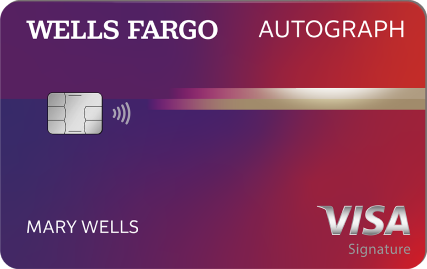
Pick this card if: You want excellent rewards across popular spending categories without an annual fee, a combination that’s surprisingly hard to find.
- Welcome Bonus
- 20,000 points ($200 cash redemption value)
- Rewards Rate
- 1x-3x points
- Annual Fee
- $0
- Purchases Intro APR
- 0% intro APR for 12 months from account opening on purchases
- Regular APR
- 18.74%, 24.74%, or 28.74% Variable APR
- Recommended Credit Score
- 670-850 (Good to Excellent)
Card Details
- Apply Now to take advantage of this offer and learn more about product features, terms and conditions.
- Earn 20,000 bonus points when you spend $1,000 in purchases in the first 3 months - that's a $200 cash redemption value.
- Earn unlimited 3X points on the things that really add up - like restaurants, travel, gas stations, transit, popular streaming services, and phone plans. Plus, earn 1X points on other purchases.
- $0 annual fee.
- 0% intro APR for 12 months from account opening on purchases. 18.74%, 24.74%, or 28.74% variable APR thereafter.
- Up to $600 of cell phone protection against damage or theft. Subject to a $25 deductible.
- Redeem your rewards points for travel, gift cards, or statement credits. Or shop at millions of online stores and redeem your rewards when you check out with PayPal.
- Find tickets to top sports and entertainment events, book travel, make dinner reservations and more with your complimentary 24/7 Visa Signature® Concierge.
Pros & Cons
Pros
- Excellent rewards rate for popular categories
- Rare travel card with 0% intro APR offer on purchases
- No annual fee
Cons
- Some annual fee travel cards offer better rewards and perks
- No balance transfer 0% intro APR offer
Why we like it
It’s hard to find a no-annual-fee travel card that earns this well across so many useful categories. You get strong rewards on travel and everyday spending, plus a solid welcome bonus and a 0% intro APR offer. If you want real travel value without paying an annual fee, this is one of the strongest options around.
Opens in a new tab: Apply now for the Wells Fargo Autograph® Card →How to choose a rewards credit card
Start with two things: where you spend your money and what you want to get back.
Those two questions narrow the field quickly.
If most of your spending falls into a few categories, look for a card that rewards those purchases especially well. If your spending is spread all over the place, a strong flat-rate card may earn more overall and take less effort.
Then think about the type of reward you actually want. Cash back is straightforward. Points and miles can give you more options and sometimes more value, particularly for travel, but what they’re worth depends on how you use them.
Here’s what we’d compare:
- Earning rates on your spending. Pay more attention to what the card earns where your money actually goes than to its single highest advertised rate.
- Reward value. A point or mile doesn’t necessarily equal a penny. Look at what the rewards are worth when redeemed in ways you’d realistically use.
- Redemption options. Some programs let you redeem for cash, travel, gift cards, or other options, with different values for each.
- Transfer options. Some points can be moved to outside travel loyalty programs, which can create opportunities for higher-value redemptions. That potential is useful only if you actually want to use it.
- Welcome bonus. A strong bonus can add substantial first-year value if the spending requirement fits purchases you were already going to make.
- Annual fee. Judge the fee against rewards and benefits you’ll genuinely use, not the maximum theoretical value of everything the card offers.
- Spending caps and category rules. A great earning rate matters less if it applies to only a small amount of your spending.
- Foreign transaction fee. This is particularly important if you plan to use the card while traveling internationally.
- How much work the card requires. Higher potential value isn’t necessarily better if getting it requires more effort than you want to put in.
You don’t need the card that earns the most in theory. You need the one that produces the most useful value from the way you actually spend and redeem.
How to compare cash back, points, and miles
This is where rewards-card comparisons can get confusing.
Cash back gives you an easy benchmark. If a card earns 2% back, $100 of eligible spending generally earns $2.
Points and miles require another step.
A card earning 3 points per dollar isn’t necessarily giving you 3% back. You need to know what those points are worth when you redeem them.
The basic math is:
Points earned per dollar × value per point = effective rewards rate
Suppose you’re comparing two hypothetical cards.
Card A earns 2% cash back on everything.
If you spend $2,000 per month, that works out to about $40 per month, or $480 per year.
Now suppose Card B earns 3 points per dollar on $1,000 of your monthly spending and 1 point per dollar on the other $1,000.
You’d earn 4,000 points each month.
If you redeem those points for an average of 1 cent each, they’re worth about $40. You’re essentially back at the same $480 per year as the 2% card.
But if you have a realistic way to get 1.25 cents per point, those same 4,000 points are worth about $50 per month, or $600 per year.
That’s the comparison we care about.
The big earning number by itself doesn’t tell you which card pays more. You have to combine how quickly you earn the rewards with what those rewards are worth to you.
Your redemption habits can change which card is best
Two people can use the same rewards card and get very different value from it.
One person might redeem points for cash at a straightforward value. Another might use the same points for travel and get more value. Someone else might transfer points to a travel partner and get even more.
The highest theoretical redemption value isn’t necessarily the number you should use.
If getting 2 cents per point requires booking a trip you didn’t want, on dates that don’t work for you, that isn’t really 2 cents per point of value to you.
We prefer to compare cards using redemption methods you’d realistically use.
That’s also why someone who wants simplicity can be perfectly well served by cash back even if a points card has more theoretical upside.
Which type of rewards card fits you?
You can narrow the field considerably based on what you want your rewards to do.
Cash back makes sense if you want predictable value
Cash back is the simplest option. You generally know what you’ve earned and don’t need to spend much time thinking about how to redeem it.
If that sounds appealing, see our Best Cash Back Credit Cards and our guide to Cash Back vs. Points.
Points or miles can make sense if you travel
Travel-oriented rewards can offer more upside, particularly if you have flexibility in how you redeem them.
You don’t have to become an expert to make a travel card worthwhile. But the more interested you are in learning how different redemption options work, the more potential value there can be.
Our Best Travel Credit Cards page focuses specifically on cards built around travel rewards and benefits.
Category rewards can make sense if your spending is concentrated
If you spend heavily on things like groceries, dining, gas, or travel, a card that rewards your biggest categories can outperform a card that pays the same rate everywhere.
The key is using your spending as the starting point.
A huge earning rate in a category you barely use shouldn’t influence your decision very much.
A flat-rate rewards card can make sense if you want one card for almost everything
Not everyone needs to optimize categories.
A strong card that earns consistently across most spending can produce plenty of rewards while making the whole process much easier.
There’s value in not having to think about which card to pull out every time you buy something.
Welcome bonuses can change the first-year math
Ongoing rewards matter most over the long run, but a welcome bonus can make a big difference in the first year.
This is especially useful when you have a large expense coming that you were already planning to make. That purchase may help you qualify for the bonus while also earning the card’s normal rewards.
We’d include the bonus when comparing first-year value, but we wouldn’t let it hide a mediocre card.
The bonus happens once. The earning rates, annual fee, and redemption options stick around.
Rewards only matter after the basic economics work
If a card charges an annual fee, make sure the rewards and benefits you’ll actually use justify it.
And if you regularly carry a balance and pay interest, optimizing rewards probably shouldn’t be the priority. Interest charges can easily wipe out the value of cash back, points, or miles.
Those aren’t reasons to avoid rewards cards. They’re reasons to judge the whole card rather than focusing on the fun part.
How we rate rewards credit cards
Rewards cards can create value in very different ways, so we don’t rank them based on one earning rate.
We look at how much a card can realistically earn across different types of spending and what those rewards can actually be worth when redeemed.
For points and miles cards, that means looking beyond the number of points earned. Redemption value and flexibility matter too.
We also consider welcome bonuses, annual fees, spending caps, redemption options, cardholder benefits, and how much effort it takes to get good value from the card.
The goal is to identify cards that deliver strong rewards in the real world, not just cards with impressive numbers on a marketing page.
[See how we rate credit cards →]
Frequently asked questions about rewards credit cards
What is a rewards credit card?
A rewards credit card gives you something back on eligible purchases, usually in the form of cash back, points, or miles.
How much you earn and what those rewards are worth depends on the card and how you redeem them.
What type of credit card rewards are best?
There isn’t one type that’s best for everyone.
Cash back tends to be the easiest to value and use. Points and miles can offer more potential value, particularly for travel, but their value varies more depending on the redemption.
How do you compare points with cash back?
Convert the points into an estimated dollar value.
If a card earns 3 points per dollar and you expect to get 1 cent per point when you redeem them, that’s roughly equivalent to a 3% return on that spending.
If those points are worth 1.5 cents each to you, the effective return is closer to 4.5%.
Are credit card points always worth one cent each?
No.
Point values can vary by rewards program and by redemption option within the same program. A point might be worth one amount when redeemed for cash and another amount when used for travel.
Use the redemption method you’re realistically likely to choose when comparing cards.
What are credit card transfer partners?
Some rewards programs allow you to transfer points to participating airline or hotel loyalty programs.
Those transfers can sometimes increase the value you get from your points, but they also add another layer of complexity. We’d view transfer partners as an opportunity for additional value, not something everyone needs to use.
Are welcome bonuses worth considering?
Yes, especially when you can earn one through spending you were already planning.
A welcome bonus can materially improve the first-year value of a card, but the ongoing rewards and costs matter more the longer you keep it.
Is it worth paying an annual fee for a rewards card?
It can be.
Compare the fee with the rewards and benefits you’ll actually use. A card isn’t automatically a better deal because the advertised value of its perks is higher than the fee.
Can you have more than one rewards credit card?
Yes. Using multiple cards can increase your rewards if they complement each other, but there’s no requirement to build a complicated setup.
One good rewards card can be enough if you prefer simplicity.
Should a rewards card have no foreign transaction fee?
If you plan to use the card abroad, we’d strongly prefer one without a foreign transaction fee.
Otherwise, the fee charged on international purchases can offset a meaningful portion of the rewards you’re earning.