Advertiser Disclosure
This is an independent, advertising-supported comparison website. We may receive compensation from our partners when you click links on our site and take certain actions on their websites. This compensation helps keep this site free to use.
Compensation is one of several factors that may affect which products we feature, how prominently we feature them, and where they appear on our site, including, for example, their order on the page. Other factors may include our ratings and analysis, product availability, product features, and relevance to the page. We don't cover every credit card or offer available in the market. The order or prominence of products on our site does not necessarily reflect the rating we assign to a product or our assessment of its overall quality.
Compensation never affects our product ratings, analysis, or opinions, and our partners cannot pay us for a higher rating or a more favorable review.
Best Travel Credit Cards of 2026
 By CardAnalyst EditorsFact checkedUpdated October 6, 2026
The best travel credit cards can make trips cheaper, more comfortable, or both.
That might mean earning rewards you can use toward flights and hotels, getting airport lounge access, avoiding foreign transaction fees, or taking advantage of travel credits and protections you would otherwise have to pay for yourself.
We’ve evaluated 261 credit cards across 31 data points, with a ratings model built specifically for travel cards.
The cards below are the ones we think offer the strongest mix of travel rewards, useful benefits, and value for the annual fee.
Best Travel Credit Card
Chase Sapphire Preferred® Card

Pick this card if: You want our top travel card with valuable rewards, a big welcome bonus, and useful perks without paying a big annual fee.
- Welcome Bonus
- 75,000 points (worth at least $750)
- Rewards Rate
- 5x on Chase Travel℠, 3x on dining, 2x on all other travel
- Annual Fee
- $95
- Regular APR
- 19.24%-27.49% Variable APR
- Recommended Credit Score
- 670-850 (Good to Excellent)
Card Details
- Earn 75,000 bonus points after you spend $5,000 on purchases in the first 3 months from account opening.
- Enjoy benefits such as 5x on travel purchased through Chase Travel℠, 3x on dining, 3x on vacation homes, 3x on gas & EV charging, 3x on top streaming services and online groceries (excluding Walmart, Target, and wholesale clubs), 2x on all other travel purchases, 1x on all other purchases
- Earn up to $100 in statement credits each account anniversary year for hotel stays through Chase Travel
- Count on Trip Cancellation/Interruption Insurance, Auto Rental Collision Damage Waiver, Emergency Evacuation and Transportation and more
- Get a year of complimentary Apple TV when activated by December 31, 2026 - a value of $156.
- Complimentary DashPass which unlocks $0 delivery fees & lower service fees for 12 months when you activate by 12/31/27. Plus, a $10 promo each month on non-restaurant orders.
- Receive one statement credit of up to $120 every four years as reimbursement for the application fee charged to your card for a Global Entry, TSA Precheck® or NEXUS application.
- Transfer points to leading airline and hotel loyalty programs
- Member FDIC
Pros & Cons
Pros
- Big welcome bonus
- Strong rewards on travel and dining
- Lots of ways to use rewards for travel
Cons
- No 0% intro APR offer
- Some other travel cards offer better rewards and perks (though also higher annual fees)
Why we like it
This is our favorite all-around travel card. It packs a lot of value into one card without making things overly complicated, and the annual fee is much less than premium travel cards. You earn strong rewards on the kinds of purchases travelers make regularly, get a big welcome bonus, and have plenty of good ways to use those rewards for travel.
Opens in a new tab: Apply now for the Chase Sapphire Preferred® Card →Best Premium Travel Card
Capital One Venture X Rewards Credit Card

Pick this card if: You're a regular traveler looking to rack up serious rewards, perks like lounge access, plus a strong welcome bonus and annual travel credits.
on Capital One's website
Rates & Fees for Capital One Venture X Rewards Credit Card (opens in a new tab)
- Welcome Bonus
- 75,000 miles (Worth $750 in travel)
- Rewards Rate
- 2x-10x Miles
- Annual Fee
- $395
- Regular APR
- 19.49%-28.49% Variable APR
- Recommended Credit Score
- 720-850 (Excellent)
Card Details
- Earn 75,000 bonus miles when you spend $4,000 on purchases in the first 3 months from account opening, equal to $750 in travel
- Receive a $300 annual credit for bookings through Capital One Travel, where you'll get Capital One's best prices on thousands of trip options
- Get 10,000 bonus miles (equal to $100 towards travel) every year, starting on your first anniversary
- Earn unlimited 10X miles on hotels and rental cars booked through Capital One Travel and 5X miles on flights and vacation rentals booked through Capital One Travel
- Earn unlimited 2X miles on all other purchases
- Enjoy access to 1,300+ lounges worldwide, including Capital One Lounge and Landing locations and participating Priority Pass™ lounges, after enrollment
- Use your Venture X miles to easily cover travel expenses, including flights, hotels, rental cars and more—you can even transfer your miles to your choice of 15+ travel loyalty programs
- Enjoy a $100 experience credit and other premium benefits with every hotel and vacation rental booked from the Premier Collection
- Receive up to a $120 credit for Global Entry or TSA PreCheck®
- Top rated mobile app
Why we like it
Our top pick for premium travel cards, this card is packed with value. It offers an impressive ongoing rewards structure and a strong welcome bonus, plus perks like lounge access. The annual fee might look large, but it's much smaller than some other premium travel cards and can be easily offset by regular travel purchases and the annual travel credit.
Opens in a new tab: Apply now for the Capital One Venture X Rewards Credit Card →Best no annual fee travel card
Wells Fargo Autograph® Card
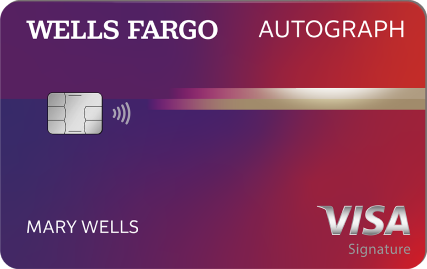
Pick this card if: You want excellent rewards across popular spending categories without an annual fee, a combination that’s surprisingly hard to find.
- Welcome Bonus
- 20,000 points ($200 cash redemption value)
- Rewards Rate
- 1x-3x points
- Annual Fee
- $0
- Purchases Intro APR
- 0% intro APR for 12 months from account opening on purchases
- Regular APR
- 18.74%, 24.74%, or 28.74% Variable APR
- Recommended Credit Score
- 670-850 (Good to Excellent)
Card Details
- Apply Now to take advantage of this offer and learn more about product features, terms and conditions.
- Earn 20,000 bonus points when you spend $1,000 in purchases in the first 3 months - that's a $200 cash redemption value.
- Earn unlimited 3X points on the things that really add up - like restaurants, travel, gas stations, transit, popular streaming services, and phone plans. Plus, earn 1X points on other purchases.
- $0 annual fee.
- 0% intro APR for 12 months from account opening on purchases. 18.74%, 24.74%, or 28.74% variable APR thereafter.
- Up to $600 of cell phone protection against damage or theft. Subject to a $25 deductible.
- Redeem your rewards points for travel, gift cards, or statement credits. Or shop at millions of online stores and redeem your rewards when you check out with PayPal.
- Find tickets to top sports and entertainment events, book travel, make dinner reservations and more with your complimentary 24/7 Visa Signature® Concierge.
Pros & Cons
Pros
- Excellent rewards rate for popular categories
- Rare travel card with 0% intro APR offer on purchases
- No annual fee
Cons
- Some annual fee travel cards offer better rewards and perks
- No balance transfer 0% intro APR offer
Why we like it
It’s hard to find a no-annual-fee travel card that earns this well across so many useful categories. You get strong rewards on travel and everyday spending, plus a solid welcome bonus and a 0% intro APR offer. If you want real travel value without paying an annual fee, this is one of the strongest options around.
Opens in a new tab: Apply now for the Wells Fargo Autograph® Card →Capital One Venture Rewards Credit Card

Limited time offer: Enjoy a one-time $300 Capital One Travel stays credit, plus earn 75,000 bonus miles -- valued at more than $1,000 towards travel.
on Capital One's website
Rates & Fees for Capital One Venture Rewards Credit Card (opens in a new tab)
- Welcome Bonus
- $300 + 75,000 Miles
- Rewards Rate
- 2x-5x Miles
- Annual Fee
- $95
- Regular APR
- 19.49%-28.49% Variable APR
- Recommended Credit Score
- 670-850 (Good to Excellent)
Card Details
- LIMITED-TIME OFFER: Enjoy $300 to use on hotel and vacation rental bookings through Capital One Travel in your first cardholder year, plus earn 75,000 bonus miles once you spend $4,000 on purchases within the first 3 months from account opening – that’s more than $1,000 in travel value
- Earn unlimited 2X miles on every purchase, every day
- Earn 5X miles on hotels, vacation rentals and rental cars booked through Capital One Travel
- Miles won't expire for the life of the account and there's no limit to how many you can earn
- Receive up to a $120 credit for Global Entry or TSA PreCheck®
- Use your miles to get reimbursed for any travel purchase—or redeem by booking a trip through Capital One Travel
- Enjoy a $50 experience credit and other premium benefits with every hotel and vacation rental booked from the Lifestyle Collection
- Transfer your miles to your choice of 15+ travel loyalty programs
- Top rated mobile app
Pros & Cons
Pros
- Excellent unlimited rewards rate on purchases
- Flexible ways to use miles for travel
- Useful travel perks for a modest annual fee
Cons
- Some competing travel cards offer higher rewards in specific categories
- No 0% intro APR offer
- No complimentary airport lounge access
Why we like it
This is one of the easiest travel cards to get a lot of value from. You get an excellent unlimited rewards rate on purchases without having to track bonus categories, plus plenty of ways to use your miles for travel. Add in useful travel perks and a modest $95 annual fee, and it’s a strong option if you want solid travel rewards without making things complicated.
Opens in a new tab: Apply now for the Capital One Venture Rewards Credit Card →Citi Strata Premier® Card
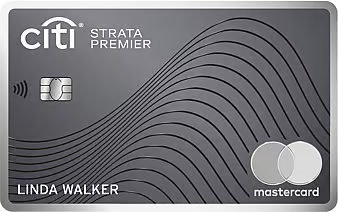
Pick this card if: You want strong travel rewards on everyday spending and a big welcome bonus, without paying a premium annual fee.
- Welcome Bonus
- 60,000 points
- Rewards Rate
- 1x-10x points
- Annual Fee
- $95
- Regular APR
- 19.74%-27.74% Variable APR
- Recommended Credit Score
- 670-850 (Good to Excellent)
Card Details
- Earn 60,000 bonus ThankYou® Points after spending $4,000 in the first 3 months of account opening, redeemable for $600 in gift cards or travel rewards at thankyou.com.
- Earn 10 Points per $1 spent on Hotels, Car Rentals, and Attractions booked on CitiTravel.com.
- Earn 3 Points per $1 on Air Travel and Other Hotel Purchases, at Restaurants, Supermarkets, Gas and EV Charging Stations.
- Earn 1 Point per $1 spent on all other purchases
- $100 Annual Hotel Benefit: Once per calendar year, enjoy $100 off a single hotel stay of $500 or more (excluding taxes and fees) when booked through CitiTravel.com. Benefit applied instantly at time of booking.
- No expiration and no limit to the amount of points you can earn with this card
- No Foreign Transaction Fees on purchases
Pros & Cons
Pros
- Strong rewards on everyday spending
- Big welcome bonus
Cons
- Higher-earning travel cards exist, but they often cost more to carry
- No airport lounge access
Why we like it
This card gives you a lot of travel value without pushing you into a premium annual fee. You earn strong rewards on everyday spending, get a big welcome bonus, and the hotel benefit can help offset the annual fee if you use it. It’s a strong choice if you want a rewarding travel card without paying hundreds of dollars a year to carry it.
Opens in a new tab: Apply now for the Citi Strata Premier® Card →How to choose a travel credit card
Start with how you actually travel.
Someone who takes one or two trips a year probably needs a very different card from someone who flies every month. And a card packed with premium benefits isn’t automatically better if most of those benefits go unused.
Here’s what we’d look at most closely:
- How the card earns rewards. Look at what it earns on travel, dining, and your other major spending categories.
- What the rewards are worth. Points and miles can have very different values depending on how you redeem them.
- How you can redeem them. Some cards make it easy to use rewards toward travel. Others give you more opportunities to get extra value if you’re willing to put in a little work.
- Transfer partners. Some rewards can be transferred to airline or hotel loyalty programs, which can open up higher-value redemption options.
- Annual fee. Travel cards often charge higher fees than cash back cards, so the benefits you actually use need to justify the cost.
- Travel credits. These can offset a meaningful part of an annual fee, but only count them at full value if you would have spent the money anyway.
- Airport lounge access. Valuable for frequent flyers, much less important if you rarely spend time in airports.
- Foreign transaction fee. If you travel internationally, we strongly prefer a card without one.
- Travel protections. Trip cancellation or interruption coverage, rental car protections, baggage benefits, and similar features can be useful when something goes wrong.
- Welcome bonus. Travel-card bonuses can be valuable, especially if you can meet the spending requirement without buying things you otherwise wouldn’t have.
If you’re still deciding whether travel should even be the main focus of your card, our How to Choose the Right Credit Card guide is a good place to start.
The goal here isn’t to find the card with the most travel perks. It’s to find the one with the most perks you’ll actually use.
Flexible travel rewards vs. airline and hotel cards
One of the first decisions is whether you want flexible rewards or rewards tied to a particular travel brand.
Flexible travel cards generally give you more choices. You may be able to use rewards across different airlines, hotels, or other travel purchases rather than committing to one company.
Airline and hotel cards can make more sense when you regularly use the same brand. Airline cards may offer benefits such as free checked bags or priority boarding, while hotel cards can include things like free-night certificates or help toward elite status.
The tradeoff is flexibility. Rewards tied to one airline or hotel program generally stay within that program, while flexible points give you more ways to use what you earn.
If you’re mainly interested in maximizing rewards and don’t necessarily need travel-specific perks, it’s also worth looking at our Best Rewards Credit Cards. Some of the strongest rewards cards work very well for travel without being built entirely around it.
If you usually book whichever airline has the best route and price, flexibility can be worth a lot. If you regularly fly the same airline or stay with the same hotel group, the brand-specific benefits may be more useful.
Start with your existing travel habits rather than choosing a card and then changing those habits to make the benefits work.
How much are travel points actually worth?
This is where travel rewards get more complicated than cash back.
A point doesn’t necessarily have one fixed value.
Suppose a redemption requires 20,000 points for a trip that would otherwise cost $300. You’re getting about 1.5 cents per point.
The math is:
Cash price of the travel ÷ points required = value per point
But that calculation only matters if you actually wanted that trip.
A redemption that looks amazing on paper isn’t especially valuable if it requires you to take a flight you wouldn’t have booked, stay at a hotel you don’t want, or travel at an inconvenient time.
We care about usable value, not the highest theoretical cents-per-point number someone can find.
If you want to compare travel points directly with cash back, our Cash Back vs. Points guide goes deeper into how we think about the tradeoff.
Transfer partners can increase the upside
Some travel rewards programs let you move points into participating airline or hotel loyalty programs.
That can sometimes produce much more value than redeeming points directly for travel.
It also adds complexity. You may need to compare award availability, transfer ratios, and the cash price of the trip before deciding whether a transfer makes sense. Transfers can also be difficult or impossible to reverse once completed.
For someone who enjoys travel rewards, that flexibility can be one of the biggest reasons to choose a points card.
For someone who wants to book a trip without thinking much about it, simpler redemption options may be more valuable.
You don’t have to maximize every point to have a good travel card.
Don’t overvalue travel credits
Travel credits are one of the easiest benefits to overrate.
If a card charges a large annual fee but offers hundreds of dollars in credits, the math can look compelling. But a $100 credit is only worth $100 to you if it replaces $100 you were going to spend anyway.
A credit for Global Entry or TSA PreCheck is a good example. If you were already planning to enroll and would have paid the fee yourself, that benefit can be close to face value. If you had no intention of signing up, its value to you is much lower.
The same logic applies to airline credits, hotel credits, rideshare credits, and other perks. If a benefit makes you book through a service you normally wouldn’t use or spend money you otherwise wouldn’t have spent, don’t automatically count it at full value.
This is especially important with premium travel cards. A long list of credits can make a card look cheaper than it really is.
When is airport lounge access worth paying for?
Lounge access can be a great perk if you fly often.
A quieter place to sit, food and drinks, Wi-Fi, and somewhere to wait through a long layover can make travel more pleasant.
But it’s also a good example of a benefit that sounds more valuable than it is for some people.
If you fly twice a year and usually arrive at the airport shortly before boarding, lounge access probably shouldn’t drive your card choice.
If you’re in airports constantly, the same benefit can be worth a lot.
Check the fine print too. Lounge benefits can require enrollment, restrict which lounges you can enter, limit guests, or charge a fee for bringing someone with you.
We’d value lounge access based on how often you’ll realistically use it, not what a lounge membership theoretically costs on its own.
Travel protections are easy to overlook
Rewards get most of the attention, but travel protections can be one of the more useful parts of a travel card.
Depending on the card, benefits may include things like trip cancellation or interruption coverage, baggage protection, rental car coverage, or reimbursement for certain travel delays.
The details matter a lot. Coverage limits, exclusions, and requirements vary, and you may need to pay for the trip with the card to qualify.
We wouldn’t choose a travel card based solely on insurance benefits, but they can break a close tie between otherwise similar cards.
And when a trip actually goes wrong, they can matter more than an extra fraction of a point per dollar.
Premium travel cards can be worth the fee
A high annual fee isn’t automatically a bad deal.
For someone who travels often and uses the benefits, a premium card can return far more value than it costs.
Add up the rewards and benefits you expect to use without changing your normal behavior. Then subtract the annual fee.
If the card still comes out comfortably ahead, the fee may be worth paying.
If you have to use every credit perfectly and assign full retail value to every perk just to break even, a simpler card may make more sense.
Travel rewards are especially valuable when you have flexibility
The more flexible you are, the easier it can be to get strong value from travel rewards.
That could mean being willing to travel on different dates, use different airlines, stay in different hotels, or compare several redemption options before booking.
Someone who always needs a particular nonstop flight at a particular time may find fewer opportunities to squeeze extra value from points.
That doesn’t make a travel card a bad choice. It just means the highest theoretical redemption values may not be realistic for the way you travel.
Travel rewards vs. cash back
You don’t need a travel card just because you travel.
If you’d rather earn rewards with a clear dollar value and then use the cash toward whatever trip you want, a good cash back card can work perfectly well. Our Best Cash Back Credit Cards page has our top picks for that approach.
Travel cards become more interesting when you value things like travel-specific benefits, flexible points, transfer partners, or the potential to get more value from your rewards when booking trips.
How we rate travel credit cards
Travel cards need to do more than earn a lot of points.
We look at how quickly rewards can be earned, what those rewards are realistically worth, how flexible the redemption options are, and whether the card offers benefits travelers can actually use.
Annual fees matter, but so does what you get for paying them.
We also consider travel credits, transfer options, lounge access, foreign transaction fees, travel protections, welcome bonuses, and long-term usefulness.
A card with the longest benefits list doesn’t automatically score highest. We care more about whether those benefits add real value for the traveler the card is designed for.
[See how we rate credit cards →]
Frequently asked questions about travel credit cards
What is a travel credit card?
A travel credit card earns rewards or provides benefits designed around travel.
That can include points or miles, travel credits, airport lounge access, hotel or airline benefits, travel protections, or some combination of those features.
Are travel credit cards worth it?
They can be, especially if you travel often enough to use the rewards and benefits.
Compare the annual fee with the value you realistically expect to get back rather than adding up every advertised benefit at full value.
If travel isn’t a major priority, you may get more value from one of our Best Rewards Credit Cards or Best Cash Back Credit Cards instead.
How much is a travel point worth?
There isn’t one universal value.
The value depends on the rewards program and how you redeem the points. A point may be worth one amount toward a simple travel booking and considerably more or less through another redemption option.
What are transfer partners?
Transfer partners are airline or hotel loyalty programs that accept points from certain credit card rewards programs.
They can sometimes give you access to higher-value travel redemptions, but they require more work than simply redeeming points directly.
Do I need a travel card with lounge access?
Not necessarily.
Lounge access can be valuable for frequent travelers, but it shouldn’t be a major factor if you rarely fly or wouldn’t use lounges often.
Also check whether the card requires enrollment or places limits on guests before assigning much value to the benefit.
Should a travel credit card have no foreign transaction fee?
If you plan to use it internationally, yes. We’d strongly prefer a travel card without a foreign transaction fee.
Otherwise, fees on purchases abroad can eat into the rewards you’re earning.
Is an airline card better than a general travel card?
It depends on how you travel.
An airline card may make sense if you regularly fly the same airline and value benefits such as free checked bags or priority boarding. A general travel card can be better if you want more freedom to choose among airlines and other travel options.
Is a hotel credit card worth it?
It can be for someone who stays frequently with the same hotel brand and makes good use of benefits such as free-night certificates or elite-status perks.
If you usually choose hotels based on price or location rather than loyalty to one brand, a more flexible travel card may be a better fit.
Are premium travel cards worth high annual fees?
They can be for frequent travelers who use enough of the card’s rewards, credits, and benefits to justify the cost.
We wouldn’t pay a large annual fee just because the card advertises benefits with a high combined dollar value. The benefits have to be valuable to you.